








FCL (Full Container Load) — Definition & 2025 Ocean Freight Scope Updated Dec 2025
Source: International Maritime Organization (IMO), major ocean carriers (VOCCs), U.S. Customs and Border Protection (CBP), Federal Maritime Commission (FMC), and WinsBS Research (2025).
What Is FCL (Full Container Load)?
View Industry Definition
A Full Container Load (FCL) is an ocean freight shipment in which a single shipper books exclusive use of a container, such as a 20GP, 40GP, or 40HQ. The container is loaded (“stuffed”) at origin, sealed, moved through the port-to-port leg, and then unloaded (“devanned”) at destination, typically on a CY–CY (Container Yard to Container Yard) basis.
- One shipper controls all cargo inside the container (even if SKU mix is diverse).
- Container is usually sealed at origin and opened only after arrival and customs clearance.
- Rates are quoted per container (by size and type), not per CBM as in LCL Shipment.
- Commonly used for stable replenishment flows to 3PL warehouses, FBA, and FBM networks.
Operationally, FCL bookings are arranged through an ocean carrier (VOCC), an NVOCC, or a Freight Forwarder. The shipment is documented under a Master Bill of Lading (MBL) and often a House Bill of Lading (HBL) when an intermediary is involved.
— WinsBS Research, Ocean Freight Utilization & Cost Study 2025
FCL vs LCL — Key Differences
FCL and LCL (Less than Container Load) are the two main modes for ocean freight. They differ in cost structure, handling, and risk profile:
| Aspect | FCL (Full Container Load) | LCL (Less than Container Load) |
|---|---|---|
| Who Uses the Container? | One shipper per container (exclusive use). | Multiple shippers share space in one container. |
| Pricing Basis | Per container (by size, type, service level). | Per CBM/weight with minimum charges. |
| Handling & Damage Risk | Fewer handling points; lower risk of mix-ups or damage. | More consolidations/deconsolidations; higher handling exposure. |
| Best For | Volumes approaching full container or regular replenishment lanes. | Smaller, irregular shipments or market tests. |
| Customs & Clearance | Clears as one container for one importer. | Container holds multiple importers; delays can affect all. |
For cross-border e-commerce, many brands start with LCL and then graduate to FCL once volumes and demand stabilize, especially on China–U.S. and Asia–U.S. lanes feeding Amazon and Shopify networks.
Regional Variations & Regulatory Nuance (2025)
View Regional Differences
| Region / Trade Lane | Key Authorities / Practices | FCL-Specific Considerations |
|---|---|---|
| United States (Imports) | CBP, FMC, U.S. ports & rail ramps | Accurate ISF 10+2 and AMS filings must align with the MBL/HBL. FCL shipments are sensitive to Demurrage, Detention, and Last Free Day (LFD) at congested ports. |
| China Export (China → U.S./EU) | MOFCOM, local maritime authorities, terminal operators | Strict cut-off times for CY gate-in and Verified Gross Mass (VGM) submission. Many shippers rely on NVOCCs to secure space and manage roll-over risk during peak seasons. |
| European Union (Imports) | EU customs, port authorities, safety & eco rules | FCL movements must comply with EU customs safety filings and environmental regulations. For B2C and e-commerce flows, VAT rules and IOSS interplay with how FCL cargo is devanned into local fulfillment networks. |
| Asia–U.S. E-commerce Lanes | Hybrid NVOCC / 3PL ecosystems | FCL containers are often routed directly into U.S. 3PL campuses or cross-docks serving Amazon FBA, FBM, and DTC channels. Slot availability, chassis supply, and inland rail schedules heavily influence total lead time. |
Expert Insight — FCL for Cross-Border E-commerce Brands
View Analyst Commentary
Maxwell Anderson, Editor-in-Chief & Data Director, WinsBS Research:
“For e-commerce brands, the shift from LCL to FCL is usually the moment the supply chain becomes truly scalable. With FCL, the question is no longer just ‘What is the freight rate?’ but:
• How consistently can we hit cut-offs and ETD/ETA windows?
• How much port storage (demurrage) and container usage (detention) are we exposing ourselves to?
• How smoothly can we push a full box into FBA, FBM, or a multi-node 3PL network without bottlenecks?
For China–U.S. flows, well-planned FCL routings — aligned with warehouse receiving calendars and inventory targets — often reduce landed cost per unit by 10–20% compared with fragmented LCL, while also lowering the risk of partial stockouts.”
— WinsBS Research, FCL Utilization & Inventory Flow Study 2025
Risk Radar — FCL-Related Risks for Importers (2025)
View Critical Risk Scenarios
FCL FAQ — Common Questions
What does FCL (Full Container Load) actually mean?
FCL means one shipper books a container for exclusive use, regardless of whether the physical capacity is fully used. The shipper controls how goods are loaded, the seal number, and the routing, and pays a container-level rate instead of per-CBM charges.
When should I choose FCL instead of LCL?
FCL usually makes sense when your volume approaches a significant portion of a 20GP or 40HQ, or when you ship regularly along the same lane. At that point, FCL can reduce per-unit freight cost, simplify customs clearance, and lower damage risk compared with LCL consolidation.
How many CBM fit in a 20GP or 40HQ container?
As a planning reference, a 20GP container commonly holds around 28–30 CBM of usable space, while a 40HQ holds around 65–70 CBM, depending on packaging and palletization. Exact capacity depends on SKU dimensions, stacking limits, and whether you palletize or floor-load cartons.
How long does an FCL shipment from China to the U.S. take?
Typical port-to-port transit times range from about 2–4 weeks depending on origin and destination ports, carrier service, and seasonal congestion. You must also account for origin stuffing, export clearance, U.S. customs release, drayage, and delivery to your warehouse or fulfillment center.
How does FCL connect to FBA, FBM, and 3PL fulfillment?
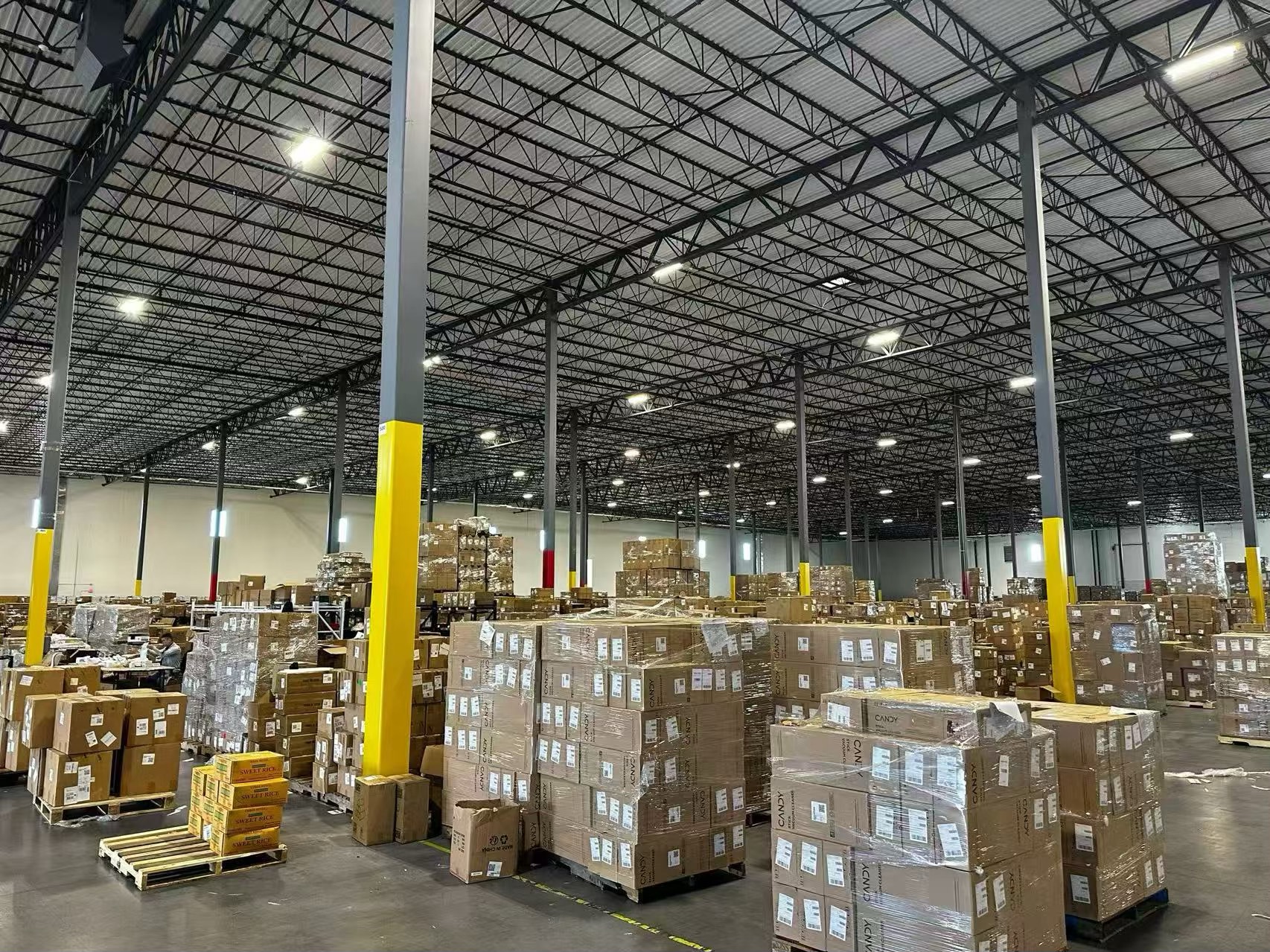
After your FCL container arrives and clears customs, it is devanned at a warehouse, cross-dock, or bonded warehouse. From there, cartons or pallets are routed into Amazon FBA, FBM facilities, or a 3PL network that serves your Shopify and marketplace orders. Good planning aligns FCL arrivals with warehouse receiving calendars to avoid demurrage and detention.
Connect Your FCL Shipments with U.S. Fulfillment
Booking the right FCL service is only one part of a resilient supply chain. The other part is what happens right after the container is available: DO release, drayage, devanning, and inventory allocation into FBA, FBM, or DTC-focused 3PL warehouses.
WinsBS works alongside your existing carrier, NVOCC, or freight forwarder to:
- Receive FCL containers at U.S. inbound hubs and devann cartons or pallets safely.
- Route inventory into Amazon FBA, FBM, or multi-channel 3PL nodes based on your demand plan.
- Coordinate DO release, drayage, and appointment booking to control demurrage and detention exposure.
- Align FCL arrival schedules with inventory targets so you avoid both stockouts and long-term overstock.
If you are moving regular FCL volumes from China or Asia into the U.S. and want tighter coordination between ocean freight, customs, and U.S. fulfillment, you can start a low-friction conversation with WinsBS today.
WinsBS Blog Insights
FCL vs LCL: When E-commerce Brands Should Switch Containers
Volume thresholds, carton layouts, and inventory risk — how to decide when to move from LCL to FCL for China–U.S. shipments.
Read Full Guide →
Demurrage & Detention: FCL Playbook for China–U.S. Importers
Practical steps to align NVOCC, customs broker, and 3PL operations to avoid runaway port and container charges on FCL shipments.
Open the Playbook →
From Container to Cart: Devanning FCL into FBA & 3PL Networks
How devanning strategy, palletization, and ASN accuracy influence inbound performance at Amazon and independent 3PL warehouses.
View Checklist →Content Attribution & License
General definitions and public references are shared under the CC BY-SA 4.0 License.
Analytical insights and commentary labeled “WinsBS Research” are original works © WinsBS Research (2025) and licensed exclusively to WinsBS Wiki for educational use.
Data references include carrier tariff guides, CBP import guidance, FMC resources on ocean transportation intermediaries, and WinsBS Research datasets on FCL utilization, landed cost, and e-commerce inventory flows.
* Information verified as of December 2025. WinsBS Research assumes no liability for regulatory or pricing changes after publication.