








Uyghur Forced Labor Prevention Act (UFLPA) — Definition & 2025 Enforcement Framework Updated Dec 2025
Source: U.S. Department of Homeland Security (DHS), U.S. Customs and Border Protection (CBP), Forced Labor Enforcement Task Force (FLETF), U.S. Department of Labor, Office of the U.S. Trade Representative (USTR), and WinsBS Research (2025). UFLPA is a U.S. federal law that establishes a rebuttable presumption that certain goods linked to forced labor in Xinjiang or listed entities are prohibited from entering the United States.
Industry & Legal Definition
View Official-Aligned Definition
The Uyghur Forced Labor Prevention Act (UFLPA) is a U.S. federal law that took effect in 2022 to strengthen the long-standing ban on importing goods made with forced labor. It establishes a rebuttable presumption that any goods mined, produced, or manufactured wholly or in part in China’s Xinjiang Uyghur Autonomous Region (XUAR), or by an entity on the UFLPA Entity List, are made with forced labor and therefore cannot be imported into the United States unless the importer proves otherwise with clear and convincing evidence.
In practice, UFLPA shifts the burden of proof onto importers: it is no longer enough to say that supply chains are “low risk.” Companies must demonstrate traceability down to raw materials and provide documented proof that their goods are not linked to forced labor in Xinjiang or to listed entities.
— DHS & Forced Labor Enforcement Task Force (FLETF) Strategy Updates
UFLPA Enforcement Structure — Who Does What?
View U.S. Agencies & Enforcement Roles
Although UFLPA is a U.S. federal law, enforcement is shared across multiple agencies. For importers, the most visible touchpoints are CBP at the border and DHS/FLETF at the policy and strategy level.
| Agency / Body | Primary Role Under UFLPA | What Importers Experience |
|---|---|---|
| CBP (U.S. Customs and Border Protection) | Front-line enforcement of Section 307 of the Tariff Act and UFLPA rebuttable presumption; issues detentions, exclusions, and seizures of shipments suspected of forced labor ties. | Receipt of detention notices, document requests, and final decisions on release, exclusion, or seizure. CBP applies UFLPA in daily import processing. |
| DHS & FLETF | Chair and coordinate the Forced Labor Enforcement Task Force (FLETF), publish the UFLPA Strategy, maintain and update the UFLPA Entity List, and designate high-priority sectors for enforcement. | Strategy updates that expand the Entity List and target sectors (e.g., apparel, cotton, aluminum, lithium, caustic soda, copper, red dates, steel, and other high-risk categories). |
| U.S. Department of Labor | Provides data on forced labor, updates Lists of Goods Produced by Child Labor or Forced Labor, and supports FLETF strategy with sector-level risk analysis. | Sector risk indicators used by compliance teams when assessing exposure in apparel, electronics, solar, agriculture, and metals supply chains. |
| USTR & Other Agencies | Integrate UFLPA enforcement with broader trade policy and sanctions tools, and coordinate with partners on supply chain resilience and due diligence expectations. | Additional scrutiny in trade remedy cases, sanctions risk for certain entities, and alignment of UFLPA with wider trade negotiations or enforcement actions. |
Since 2022, FLETF has been required to maintain and annually update the UFLPA Strategy and Entity List, with the 2025 update bringing the list to 144 Chinese entities and adding new high-priority sectors such as caustic soda, copper, lithium, red dates (jujubes), and steel.
What CBP Expects — UFLPA Documentation & Traceability
View Practical Documentation Checklist
CBP’s operational guidance makes clear that importers must be able to trace goods back through every tier of the supply chain to rebut the UFLPA presumption. This often goes deeper than typical supplier questionnaires or basic Certificates of Origin.
| Evidence Category | Examples of Supporting Documents | Where It Applies |
|---|---|---|
| Company-Level Due Diligence | Forced labor policies, supplier codes of conduct, audit protocols, training records, escalation procedures, and internal risk assessments tied to Xinjiang and listed entities. | All importers sourcing from China or high-risk sectors (cotton, apparel, solar, batteries, metals). |
| Supply Chain Mapping | Detailed maps listing every supplier and sub-supplier (Tier 1–4+), locations of farms, mines, refineries, mills, and factories, plus proof that none are in XUAR or on the UFLPA Entity List. | Products where origin of fiber, yarn, metal, polysilicon, or chemicals determines UFLPA exposure. |
| Transaction & Production Records | Purchase orders, Commercial Invoices, Packing Lists, contracts, bills of materials (BOM), production records, payroll and time records, and Bills of Lading that show non-Xinjiang sourcing. | Apparel, textiles, electronics, and metals supply chains where inputs can be traced to specific regions. |
| Independent Audits & Testing | Third-party social audits, forensic testing (e.g., cotton origin testing), and due diligence reports that confirm the absence of forced labor indicators. | High-risk products or shipments flagged by CBP for intensive review or prior violations. |
When CBP detains a shipment under UFLPA, importers have limited time to respond with a coherent traceability package. This is why many brands centralize documentation across HTS Classification, supplier contracts, Country of Origin records, and forced-labor due diligence in one system before goods ship.
Expert Insight — WinsBS Research
View Analyst Commentary
Maxwell Anderson, Editor-in-Chief & Data Director, WinsBS Research:
“In our 2025 UFLPA-focused dataset across apparel, electronics, and metals, we see that brands with pre-built traceability files and clear supplier tier maps are 3–5× more likely to secure release of detained shipments on the first submission. The difference isn’t fancy technology — it’s whether supply chain and legal teams sit on the same set of documents before CBP calls.”
Key operational takeaways for e-commerce and marketplace brands:
- Start from HTS + risk sectors: Build a UFLPA risk matrix by HTS codes and sectors (cotton & apparel, solar, aluminum, batteries, metals, agriculture) rather than by individual supplier names only.
- Connect traceability to your 3PL: Your 3PL partner and Customs Broker should have access to UFLPA documentation so they can respond quickly to CBP detention notices.
- Plan for Entity List expansion: With 144+ entities on the list and more added annually, treat UFLPA as a moving target and schedule recurring checks against DHS publications.
UFLPA Risk Radar — 2025 Importer Hazards
View Critical Risk Scenarios
- Hidden UFLPA Entity List Exposure in Tier-3/Tier-4 Suppliers
- Traceability Gaps in Fiber, Yarn, or Raw Material Origin
- Repeated CBP Detentions Under UFLPA Rebuttable Presumption
- Escalation from UFLPA Review to Withhold Release Order (WRO)
- HTS Misclassification Masking High-Risk Sectors
- Supplier Contracts Without Forced Labor Clauses or Audit Rights
For many importers, the biggest risk is not a single “bad actor” supplier, but rather incomplete visibility into upstream processing — for example, a fabric mill or anode material producer that quietly sources inputs from Xinjiang or from a listed entity.
Where UFLPA Hits E-commerce & Fulfillment the Hardest
View Typical Scenarios for Online Brands
- Amazon FBA apparel & textiles: Cotton T-shirts, leggings, or towels produced in China but using yarn or fabric linked to XUAR. Goods may be detained at FBA inbound under UFLPA, even if the final sewing factory is outside Xinjiang.
- Electronics & battery products: Devices that use lithium, graphite, or other battery materials from smelters or refiners tied to the UFLPA Entity List. Nearshoring final assembly to Mexico or Vietnam does not remove UFLPA risk if raw materials still trace back to Xinjiang.
- Solar and metal components: Panels, inverters, or metal parts that incorporate polysilicon, aluminum, copper, or steel associated with high-priority sectors in the UFLPA Strategy.
- Shopify/DTC brands shipping from China warehouses: Brands using consolidated Freight Forwarders or 3PL facilities in China may face UFLPA detentions if their transit hub mixes low-risk and high-risk goods without clean documentation.
- De Minimis no longer a shield: Even where brands used to rely on De Minimis rules for small parcels, UFLPA enforcement can still target shipments that fall under $800 but are linked to forced labor risks.
UFLPA FAQ — Common Questions from Importers
Does UFLPA apply only to goods shipped directly from Xinjiang?
No. UFLPA applies to goods mined, produced, or manufactured wholly or in part in Xinjiang, as well as goods produced by entities on the UFLPA Entity List, regardless of where the final assembly occurs. A product finished in another Chinese province or another country can still be covered if its raw materials or intermediate inputs come from Xinjiang or listed entities.
Is UFLPA enforcement automatic, or do I “opt in”?
Enforcement is automatic. CBP screens shipments using data such as HTS codes, supplier names, routing, and intelligence on high-risk sectors. If UFLPA applies, CBP can detain, exclude, or seize goods unless you provide sufficient documentation to rebut the forced labor presumption.
What’s the difference between UFLPA and a Withhold Release Order (WRO)?
UFLPA creates a statutory rebuttable presumption for Xinjiang-linked goods and Entity List companies, while Withhold Release Orders are case-specific enforcement tools targeting particular companies, facilities, or products. In practice, UFLPA operates as a broad baseline, and WROs can layer on top for additional entities or sectors.
Can I fix UFLPA risk just by changing the final factory?
Usually not. UFLPA focuses on the entire supply chain, including farms, mines, refineries, mills, and component suppliers. Moving final assembly to a low-risk region does not solve the problem if yarn, metals, chemicals, or other inputs still come from Xinjiang or a listed entity.
Need Help Passing UFLPA Reviews & CBP Detentions?
UFLPA compliance now sits at the intersection of sourcing, legal, and logistics. WinsBS helps brands map supply chains, structure documentation, and coordinate with Customs Brokers so that shipments can withstand UFLPA scrutiny.
From apparel and textiles to battery materials and electronics, our team can review your supplier map, highlight Entity List exposure, and build a practical UFLPA traceability pack that aligns with CBP expectations before goods leave the factory.
WinsBS Blog Insights
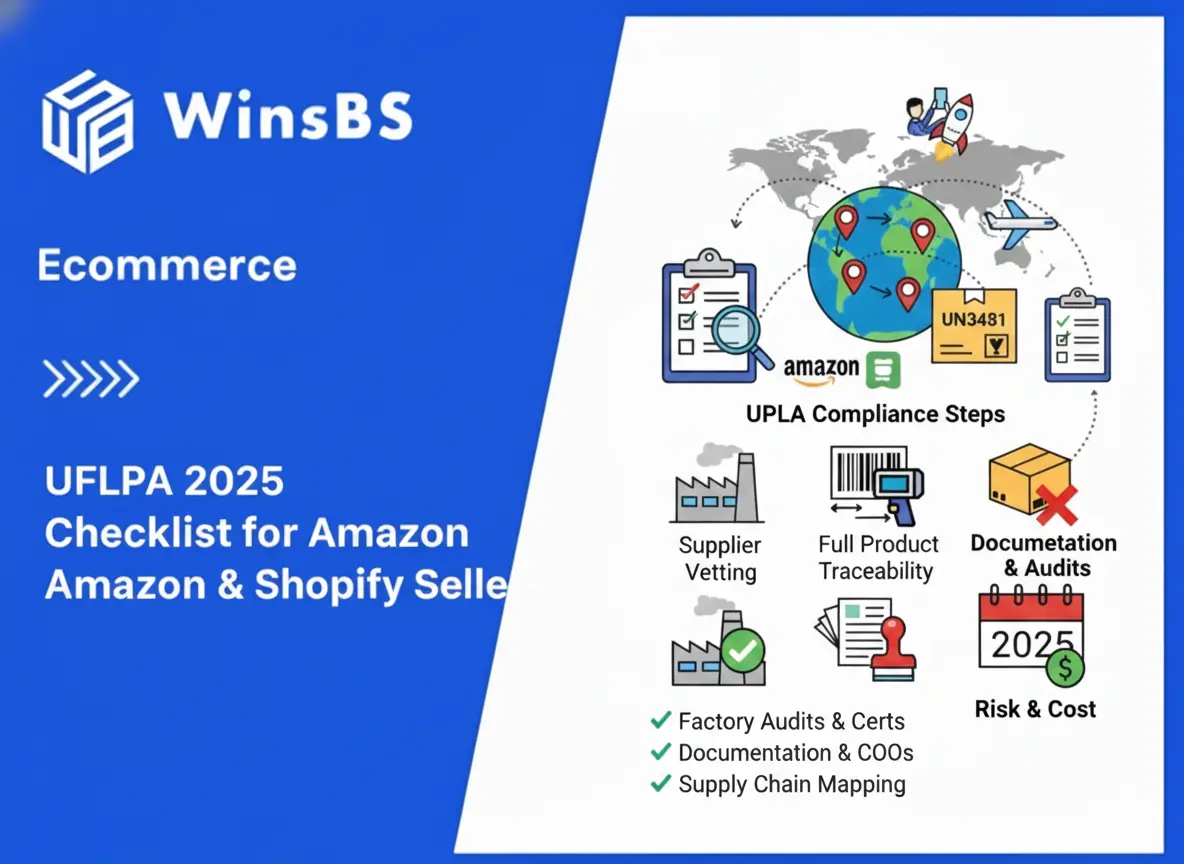
UFLPA Compliance Checklist for Amazon & Shopify Brands
A step-by-step playbook to prepare documentation, map suppliers, and avoid detention for high-risk apparel and electronics SKUs.
Read Compliance Guide →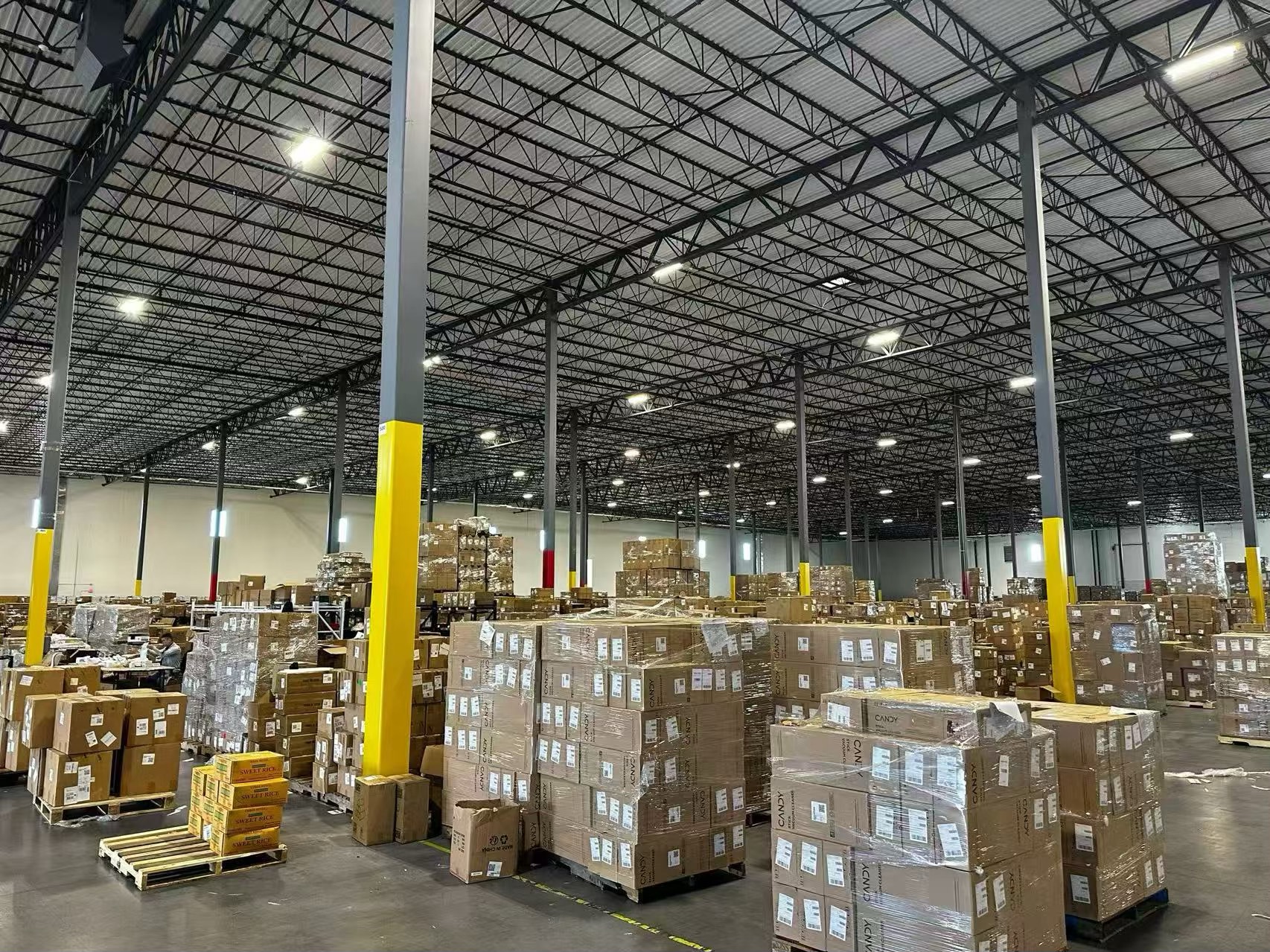
UFLPA & FBA: How to Avoid Detention at Amazon FCs
Practical coordination between suppliers, FBA prep centers, and customs brokers to keep Amazon inbound flows compliant.
Read FBA Playbook →
High-Priority Sectors Under UFLPA: How to Adjust Sourcing
What the new 2025 sectors (caustic soda, copper, lithium, red dates, steel) mean for sourcing and nearshoring plans.
Explore Sector Guide →Content Attribution & License
General definitions and public references follow the CC BY-SA 4.0 License.
Analytical insights and examples labeled “WinsBS Research” are © WinsBS Research (2025) and licensed exclusively to WinsBS Wiki for educational use.
Information verified against DHS/FLETF UFLPA Strategy updates, CBP operational guidance, and U.S. government fact sheets as of August–November 2025. Importers should always review the latest official publications before acting.