
NVOCC (Non-Vessel Operating Common Carrier) — Definition & 2025 Operational Scope Updated Dec 2025
Source: Federal Maritime Commission (FMC), U.S. Customs and Border Protection (CBP), International Chamber of Commerce (ICC), and WinsBS Research (2025).
What Is an NVOCC?
View Industry Definition
A Non-Vessel Operating Common Carrier (NVOCC) is an ocean transport intermediary that operates as a common carrier to shippers but does not own or operate vessels. Instead, an NVOCC:
- Contracts space from vessel operators (VOCCs) and manages FCL Shipment and LCL Shipment bookings.
- Issues its own House Bill of Lading (HBL) to shippers and receives a Master Bill of Lading (MBL) from the vessel carrier.
- Assumes carrier-like responsibility for cargo under the terms of the HBL, including routing, documentation, and certain liabilities.
In the United States, most NVOCCs are regulated as Ocean Transportation Intermediaries (OTIs) by the Federal Maritime Commission (FMC). In many trade lanes, NVOCCs also act as consolidators, combining multiple small shipments into a single container to reduce per-unit freight cost for shippers.
— FMC OTI & NVOCC Regulatory Framework, 46 CFR
NVOCC vs Freight Forwarder
NVOCCs and Freight Forwarders both sit between shippers and carriers, but their roles are not identical:
| Aspect | NVOCC | Freight Forwarder |
|---|---|---|
| Regulatory Status (U.S.) | Regulated as an OTI by FMC; must hold NVOCC license (for U.S. entities) or registration (for foreign-based NVOCCs). | Also treated as an OTI when arranging ocean transport, but usually positioned as an agent rather than a carrier. |
| Bill of Lading Role | Issues House Bill of Lading (HBL) in its own name and receives MBL from the vessel carrier. | Often arranges carriage under the carrier’s bill of lading, may not always issue its own HBL. |
| Liability | Assumes carrier-like responsibilities under HBL terms; subject to cargo claims as a contracting carrier. | Typically liable as an agent/forwarder for negligence, but not as a carrier unless contract says otherwise. |
| Typical Services | LCL consolidation, FCL space allocation, tariff publishing, B/L issuance, freight collection. | Route design, documentation support, customs coordination, multi-modal planning. |
In practice, many global logistics groups operate both NVOCC and forwarder entities under one umbrella, but contracts and liabilities remain distinct.
Regional Variations & Regulatory Nuance (2025)
View Regional Differences
| Region | Regulatory Body / Concept | Key Distinction for NVOCCs |
|---|---|---|
| United States | FMC — OTI / NVOCC License & Bond | NVOCCs must be licensed or registered with the Federal Maritime Commission and maintain a surety bond. U.S.-inbound filings like ISF 10+2 and AMS Filing are closely tied to accurate HBL data. |
| China | MOCT / “无船承运人” Filing | China-based NVOCCs must obtain local approval and filing as “无船承运业务经营者”, especially for China–U.S. and China–EU lanes. Many act as co-loaders who consolidate e-commerce freight into FCL containers. |
| European Union | Maritime & Contract Law Focus | No FMC-equivalent license, but NVOCCs are subject to EU maritime law, cargo liability rules, and consumer protection when serving B2C flows. Contracts often reference ICC rules and local standard trading conditions. |
| Global E-commerce Lanes | Hybrid NVOCC / 3PL Models | NVOCCs increasingly integrate with Third-Party Logistics (3PL) providers to connect ocean freight with FBA, FBM, and DTC warehouse networks. |
Expert Insight — NVOCCs in Cross-Border E-commerce
View Analyst Commentary
Maxwell Anderson, Editor-in-Chief & Data Director, WinsBS Research:
“In traditional freight, NVOCCs were mainly about rate access and consolidation. In 2025, their influence extends deeper into the e-commerce stack. For China–U.S. and Asia–U.S. trade lanes, NVOCCs determine more than just ‘port-to-port’ cost — they shape:
• how fast containers clear customs,
• how much demurrage and detention a shipper pays at destination, and
• how reliably inventory flows into U.S. fulfillment centers and 3PL warehouses.
For Amazon and Shopify brands, a well-structured NVOCC relationship — with clear service contracts, documented cut-offs, and digital visibility on HBL/MBL events — is often the difference between a stable supply chain and chronic stockouts.”
— WinsBS Research, NVOCC & E-commerce Routing Study 2025
Risk Radar — NVOCC-Related Risks for Importers (2025)
NVOCC FAQ — Common Questions
Is an NVOCC a carrier or a forwarder?
Legally, an NVOCC acts as a carrier toward the shipper because it issues its own House Bill of Lading and assumes carrier-like responsibilities. Operationally, it still relies on vessel operators for the actual transport. Many shippers treat NVOCCs as a hybrid between a Freight Forwarder and a carrier.
Do I need to check if my NVOCC is FMC-licensed?
Yes. For U.S.-inbound or U.S.-outbound ocean trade, shippers should verify that their NVOCC is properly licensed or registered with the Federal Maritime Commission and that a valid bond is in place. This improves regulatory compliance and provides clearer recourse in case of disputes or cargo claims.
How does an NVOCC impact my FCL and LCL costs?
NVOCCs negotiate space and rates with carriers across large volumes. For FCL, they may secure more competitive contract rates or flexible free-time terms. For LCL, they consolidate multiple shippers into a single container so each shipper pays only for the space used, often reducing per-unit cost for cross-border e-commerce freight.
Where does an NVOCC fit in an e-commerce supply chain?
In cross-border e-commerce, the NVOCC typically manages the ocean leg from origin port to destination port or rail ramp. After customs clearance and DO release, freight usually transfers to a 3PL, FBA inbound flow, or domestic carrier network. Clear hand-off between NVOCC, customs broker, and warehouse is essential to control demurrage and detention.
Can one company be both a freight forwarder and an NVOCC?
Yes. Many global logistics providers operate both licensed NVOCC entities and forwarding entities under one brand. The specific role on a shipment depends on which entity signs the contract and whose terms appear on the Bill of Lading or service agreement.
Connect Ocean Freight with U.S. Fulfillment
Choosing the right NVOCC is only half the equation. The other half is what happens after the container lands: customs, DO release, drayage, deconsolidation, and final-mile fulfillment into FBA, FBM, or DTC channels.
WinsBS works alongside your existing NVOCC or freight forwarder to:
- Receive FCL or LCL cargo into U.S. warehouses after customs clearance.
- Break bulk and route inventory into Amazon FBA, FBM, or multi-channel 3PL networks.
- Monitor port free-time windows and coordinate drayage so you avoid runaway demurrage and detention.
- Align inbound shipments with inventory targets, preventing stockouts and overstock at the same time.
If you are shipping from China or Asia into the U.S. and want a tighter link between your NVOCC, customs, and U.S. fulfillment, you can start a low-friction conversation with WinsBS today.
WinsBS Blog Insights
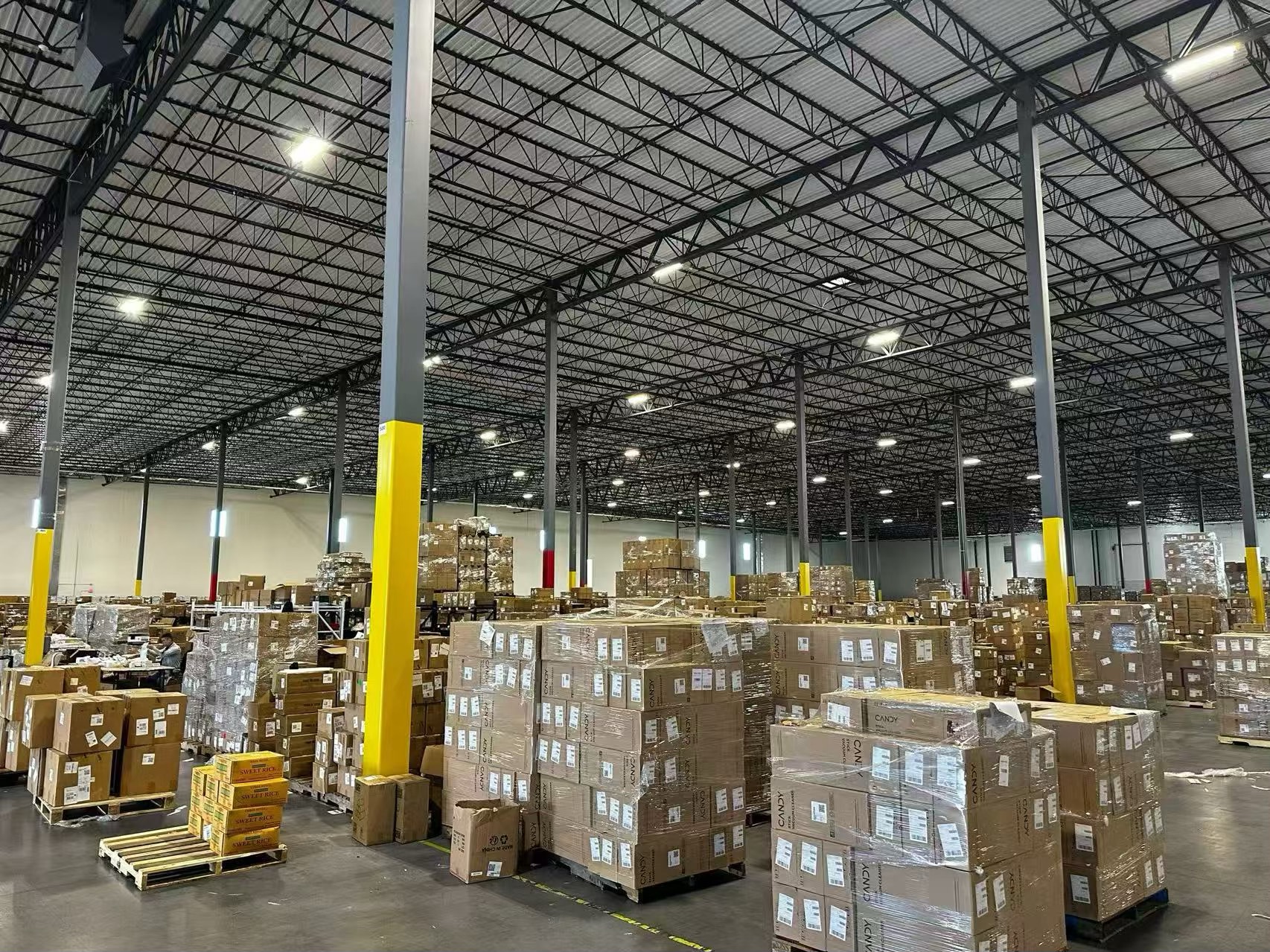
From Factory to FC: How NVOCC Choices Impact FBA Inbound
Learn how NVOCC routing, cut-offs, and consolidation directly affect FBA receiving times, demurrage exposure, and inventory availability.
Read Full Guide →
Demurrage & Detention Playbook for China–U.S. NVOCC Shipments
Case-based breakdown of how to coordinate NVOCC, customs broker, and 3PL to keep port and rail storage costs in check.
Open the Playbook →
NVOCC Selection Checklist for Amazon & Shopify Brands
Practical checklist to evaluate NVOCC partners: FMC status, rate structures, free-time terms, visibility tools, and integration with U.S. fulfillment.
View Checklist →Content Attribution & License
General definitions and public references are shared under the CC BY-SA 4.0 License.
Analytical insights and policy interpretations labeled “WinsBS Research” are original works © WinsBS Research (2025) and licensed exclusively to WinsBS Wiki for educational use.
Data sources include Federal Maritime Commission (FMC) OTI/NVOCC regulations, U.S. Customs and Border Protection (CBP) import guidance, ICC maritime trade references, and WinsBS Research datasets.
* Information verified as of December 2025. WinsBS Research assumes no liability for regulatory changes after publication.