










Supplier Lead Time — The Procurement Time Window That Determines Inventory Availability & Fulfillment Risk (2025 Guide) Updated Dec 2025
Source: APICS supply chain definitions, procurement lead time benchmarks, ERP / OMS replenishment architectures, and e-commerce fulfillment planning failures (2024–2025).
What Is Supplier Lead Time?
View industry definition
Supplier lead time is the total time required from the moment a purchase order (PO) is confirmed by a supplier until inventory is physically received, inspected, and usable for fulfillment.
In e-commerce and order fulfillment operations, supplier lead time is not a theoretical planning metric. It is a hard constraint that determines when inventory can be sold, shipped, or allocated across channels.
Orders create demand. Forecasts anticipate demand. Supplier lead time defines how early decisions must be made to avoid stockouts, delayed launches, or forced split shipments.
A complete supplier lead time typically spans: order confirmation, production or assembly, quality inspection, export readiness, and inbound transit to a fulfillment warehouse or FBA center. Any delay inside this window propagates directly into inventory unavailability.
Supplier Lead Time — Short Definition
Supplier lead time is the total time between issuing a purchase order and receiving usable inventory. It determines reorder timing, safety stock levels, and whether orders can be fulfilled on time.
What Supplier Lead Time Actually Includes
In fulfillment planning, supplier lead time is frequently underestimated because only production time is considered. In reality, it is a composite window.
- PO confirmation: supplier acknowledgment and scheduling.
- Production time: manufacturing, assembly, or sourcing cycle.
- Inspection & QA: internal QC or third-party checks.
- Packaging & export readiness: labeling, cartons, documentation.
- Inbound transit: factory to fulfillment warehouse or FBA.
Missing any of these stages leads to optimistic planning assumptions and downstream fulfillment failure.
Supplier Lead Time vs Transit Time
Supplier lead time is often confused with shipping or transit time, but they are not interchangeable.
- Transit time: the duration goods spend moving between locations.
- Supplier lead time: the full window including production, preparation, and transit.
Planning inventory using transit time alone ignores production and preparation delays, which is a common cause of unexpected stockouts.
Role of Supplier Lead Time in Inventory Planning
Supplier lead time is a core input in every inventory planning model. Without an accurate lead time range, planning formulas collapse under scale.
- Reorder point (ROP): directly driven by lead time duration.
- Safety stock: absorbs lead time variability.
- Preorder scheduling: depends on production certainty.
- Multi-warehouse allocation: requires synchronized arrival timing.
Inaccurate lead time assumptions force operators to choose between overspending on inventory or underserving customer demand.
How Supplier Lead Time Impacts Fulfillment Execution
Supplier lead time failures rarely appear as procurement problems. They surface as fulfillment symptoms.
- Stockouts: inventory not available when orders arrive.
- Split shipments: partial inventory ships first to protect SLAs.
- Expedited freight: air shipping replaces planned ocean moves.
- Delayed launches: marketing schedules miss inventory readiness.
By the time customers see delays, the root cause is often weeks earlier at the supplier planning stage.
Risk Radar (2025)
View supplier lead time failure paths
- Lead time variability: supplier performance fluctuates across orders.
- Hidden production delays: factories delay without early signals.
- MOQ pressure: long lead times force over-ordering.
- Emergency freight leakage: margins eroded by last-minute air shipments.
- Planning model breakdown: ROP and safety stock become unreliable.
Critical Risk Terms (2025)
View supplier lead time risk glossary
Supplier Lead Time — Common Questions Explained
What is supplier lead time used for?
Supplier lead time is used to determine when inventory must be ordered to avoid stockouts and fulfillment delays. It directly feeds reorder point and safety stock calculations.
Is supplier lead time the same for every order?
No. Supplier lead time often varies by season, order size, material availability, and factory capacity. Planning should account for variability, not averages alone.
Why does long lead time cause split shipments?
When some SKUs arrive late, available items are shipped first to meet delivery SLAs, resulting in partial or split fulfillment.
Can supplier lead time be reduced?
Lead time can sometimes be reduced through better forecasting, supplier scheduling, buffer inventory, or regional sourcing, but it cannot be eliminated.
What happens if lead time is underestimated?
Underestimating lead time typically results in stockouts, emergency freight costs, delayed launches, and poor customer experience.
WinsBS Blog Insights
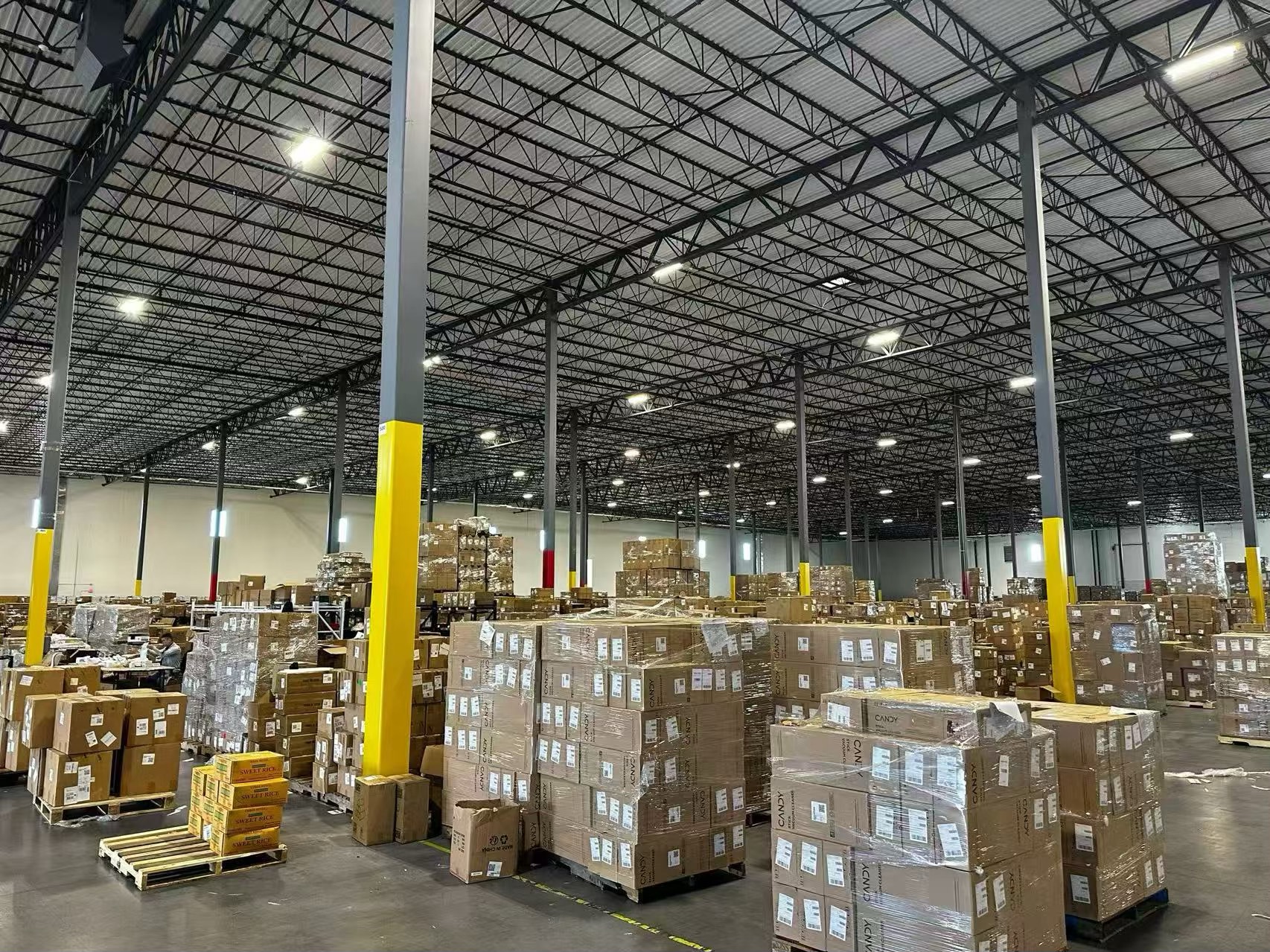
Why Supplier Lead Time Is the Hidden Cause of Stockouts
Most stockouts are blamed on forecasting errors. In reality, underestimated supplier lead time is the dominant failure point in fulfillment planning.
Read Inventory Failure Analysis →
How Supplier Delays Trigger Split Shipments
Late-arriving SKUs force partial releases. This article explains how supplier lead time variance cascades into higher shipping costs and customer confusion.
Explore Fulfillment Impact →
The Cost of Emergency Freight Caused by Poor Lead Time Planning
When supplier lead time is missed, air freight becomes the default recovery tool. This breakdown shows how margins erode at scale.
View Cost Breakdown →Supplier Lead Time & Fulfillment Risk Review
Supplier lead time should be modeled as a range, aligned with inventory buffers, and continuously validated against fulfillment outcomes.
Content Attribution & License
General definitions and public references are shared under the CC BY-SA 4.0 License .
Analytical insights and planning interpretations labeled “WinsBS Research” are © WinsBS Research (2025) and licensed exclusively to WinsBS Wiki.
* Information verified as of December 2025. WinsBS Research assumes no liability for supplier performance changes.