
Fulfilled by Amazon (FBA) — Definition, Fulfillment Scope, Fees & Risk Controls (2025) Updated Dec 2025
Source: Amazon Seller Central glossary & FBA fee help pages, Amazon capacity/metrics references, and WinsBS Research fulfillment execution playbooks (2024–2025).
What Is Fulfilled by Amazon (FBA)?
Industry-standard definition (official & operational)
Fulfilled by Amazon (FBA) is a fulfillment execution model where a seller sends inventory into Amazon’s fulfillment network, and Amazon performs the downstream operational work: storage, picking, packing, shipping, plus customer service and returns processing.
— Amazon Seller Central Glossary (FBA)
In a modern e-commerce architecture, FBA should be treated as a fulfillment execution layer inside an order lifecycle — not a business guarantee. It improves delivery speed and customer experience, but it also introduces constraints (capacity limits, inbound rules, fee schedules, and compliance friction) that sellers must actively manage.
Fulfilled by Amazon (FBA) — E-commerce Fulfillment Definition
Fulfilled by Amazon (FBA) is an e-commerce fulfillment model where sellers store inventory in Amazon fulfillment centers, and Amazon handles order picking, packing, shipping, customer service, and returns for those items.
FBA can improve conversion through fast delivery and Prime benefits, but sellers must manage inventory health, inbound compliance, capacity limits, and fee exposure to avoid cost spikes and execution failures.
Why FBA Matters in Order Fulfillment
FBA is powerful because it compresses operational complexity — Amazon standardizes pick/pack/ship at scale. But the trade-off is that your fulfillment outcome becomes dependent on Amazon’s rules: how inventory is received, distributed across FCs, stored, charged, and sometimes removed.
In practical fulfillment operations, the highest-cost mistakes happen when teams treat FBA as a “set-and-forget” channel. FBA requires inventory planning discipline (to avoid aging fees), inbound accuracy (to avoid rejections and misrouting), and compliance readiness (especially for cross-border shipments).
If you sell across channels (Shopify + Amazon, TikTok Shop + Amazon, etc.), the core decision is not “FBA or not.” The real decision is how inventory is allocated, when inventory is replenished, and which SKUs should never be locked into FBA due to fee or compliance sensitivity.
FBA vs Other Fulfillment Models (System Boundary)
| Model / Control | Who Executes Fulfillment? | Where Inventory Lives? | What You Control Most | Common Failure Mode |
|---|---|---|---|---|
| FBA | Amazon | Amazon FC network | Inbound prep + inventory planning + listing strategy | Fee spiral from aging/low supply + inbound rejection/misrouting |
| FBM | Seller / 3PL | Seller / 3PL warehouse | Routing + carrier choice + pack rules + service SLAs | Late delivery / cancellation / customer service load |
| 3PL Fulfillment (DTC) | 3PL | 3PL warehouse(s) | Multi-channel inventory + routing logic + cost engineering | Bad WMS/OMS integration causing oversells & split shipments |
| Hybrid (FBA + 3PL) | Amazon + 3PL | Split (FC + 3PL) | Allocation + replenishment cadence + exception handling | Allocation drift → stranded stock in one node, stockouts in another |
Practical note: the hybrid model often wins when your SKU mix includes both fast movers (good for FBA) and fee-sensitive or compliance-sensitive SKUs (better held in a controlled 3PL node).
Decision Signals: When FBA Is a Strong Fit (and When It Isn’t)
View operational “should / should not” signals
FBA is usually a strong fit when:
- Demand is stable and reorder timing is predictable (reduces aging exposure).
- Units are standard-size and packaging is consistent (reduces fee surprises and inbound variance).
- Return handling is heavy and you prefer Amazon to absorb customer service load.
- Prime conversion uplift matters more than marginal fulfillment cost differences.
FBA is usually a poor fit (or needs a hybrid plan) when:
- SKU is oversized / DIM-sensitive where small packaging changes can swing unit economics.
- Demand is seasonal or volatile and inventory can sit beyond healthy turn cycles.
- Cross-border compliance risk is high (traceability/documentation may be audited or detained).
- SKU has frequent variants/bundles that create labeling, prep, or commingling complexity.
Fees & Policy Controls That Change FBA Economics
FBA cost is not only the base fulfillment fee. The real cost curve is shaped by inventory health and policy-driven add-on fees. When sellers say “FBA got expensive,” it is often because a fee trigger was activated.
View common fee triggers sellers miss
Low inventory level fee (stockout-risk surcharge)
Amazon applies a low-inventory-level fee in certain cases when inventory coverage is low relative to demand. This is charged in addition to the base FBA fulfillment fee. Always check the latest Seller Central help page for scope and exemptions.
Reference: Amazon Seller Central — Low-inventory-level fee
Aged inventory surcharge (aging cost)
Inventory that sits too long in the fulfillment network can incur aging-related surcharges. This is fundamentally an inventory planning problem, not a “warehouse problem.” If your turn cycle is drifting upward, FBA fees will punish you.
Reference: Amazon Seller Central — Aged inventory surcharge
IPI / capacity limits (space access control)
Amazon uses an Inventory Performance metric system to influence storage capacity. The “minimum IPI threshold” has changed historically in different periods; sellers should treat it as a variable control and plan with buffer (don’t aim for the bare minimum).
Practical reading: Industry commentary notes Amazon has adjusted minimum thresholds in the past; do not build your model on a single fixed number.
Cross-Border Reality: Compliance Risk Still Exists in FBA
FBA does not remove import compliance risk. For China-origin or complex supply chains, the operational failure is often: inventory arrives, but cannot be used due to a documentation or enforcement escalation.
Reference: CBP — UFLPA Enforcement FAQs
FBA Risk Radar (Fulfillment-Oriented)
View common FBA failure paths (what breaks in real operations)
- Inbound shipment rejection: labeling/prep mismatch → appointment delays → inventory misses sales windows → fees rise.
- Misrouting / FC fragmentation: inventory distributed across multiple FCs → split shipments → higher per-order cost + slower replenishment clarity.
- Inventory aging trap: slow sell-through → aging surcharge and/or forced removals → liquidation destroys margin.
- Low-supply surcharge loop: chronic understocking triggers low-inventory fees while stockouts reduce ranking → demand volatility increases.
- Returns compounding loss: high return SKUs create hidden cost through disposition outcomes (sellable vs unsellable) and delayed resale.
- Compliance interruption: documentation gaps escalate into holds/detentions → inventory becomes “present but unavailable” operationally.
- Pack-size / DIM economics break: small packaging change shifts fee tier → unit economics flip negative even when sales hold steady.
Regional Variations (Operational Differences)
View regional differences that matter for fulfillment
| Region | Local Term | What Usually Changes |
|---|---|---|
| United States | Fulfilled by Amazon (FBA) | Fee programs, capacity controls, and performance policies tied to Prime conversion. |
| China (Cross-border) | 亚马逊物流 / Amazon FBA | Headhaul planning, customs documentation readiness, and forced-labor enforcement exposure. |
| European Union | Pan-EU FBA | VAT structure, multi-country stock placement, and cross-border compliance logistics. |
Critical FBA Risk Terms
View risk terminology (for operators)
- Inbound Shipment Rejection
- Stranded Inventory
- Aged Inventory Surcharge
- Low-inventory-level Fee
- Removal Order Cost
- DIM / Size-tier Fee Shock
- UFLPA Detention Risk
FBA — Fulfillment Questions Answered (PAA)
Is FBA the same as “Prime”?
Not exactly. FBA often enables Prime-eligible delivery, but Prime visibility depends on multiple performance and listing conditions. Operationally, FBA is the fulfillment execution method; Prime is the customer-facing delivery promise framework.
How is FBA different from FBM?
In FBA, Amazon runs the warehouse execution and customer service for eligible orders. In FBM, the seller (or their 3PL) controls storage, routing, packing rules, and shipping carriers — which increases control but also increases operational responsibility.
What are the most common FBA cost surprises?
The biggest surprises are almost never the base fulfillment fee — they come from fee triggers: aging-related surcharges, low-inventory-level fees, removals, and size-tier / DIM changes caused by packaging differences or SKU configuration.
Can I ship to customers before inventory is fully received at Amazon?
No. FBA can only fulfill customer orders from receipted, available inventory inside the fulfillment network. If inbound check-in is delayed, your customer delivery promise becomes an inbound operations problem.
What should I monitor weekly if I run FBA?
Monitor: inbound defects/rejections, stranded inventory, sell-through velocity, aging exposure, low-supply signals, and fee line items in Seller Central reports. The fastest way to lose money in FBA is to stop monitoring inventory health.
Does FBA remove cross-border compliance risk (e.g., UFLPA)?
No. FBA is a fulfillment execution layer; it does not override import enforcement. If documentation or supply-chain traceability is questioned, inventory can be delayed or become operationally unavailable.
WinsBS Blog Insights — FBA Execution & Risk Control
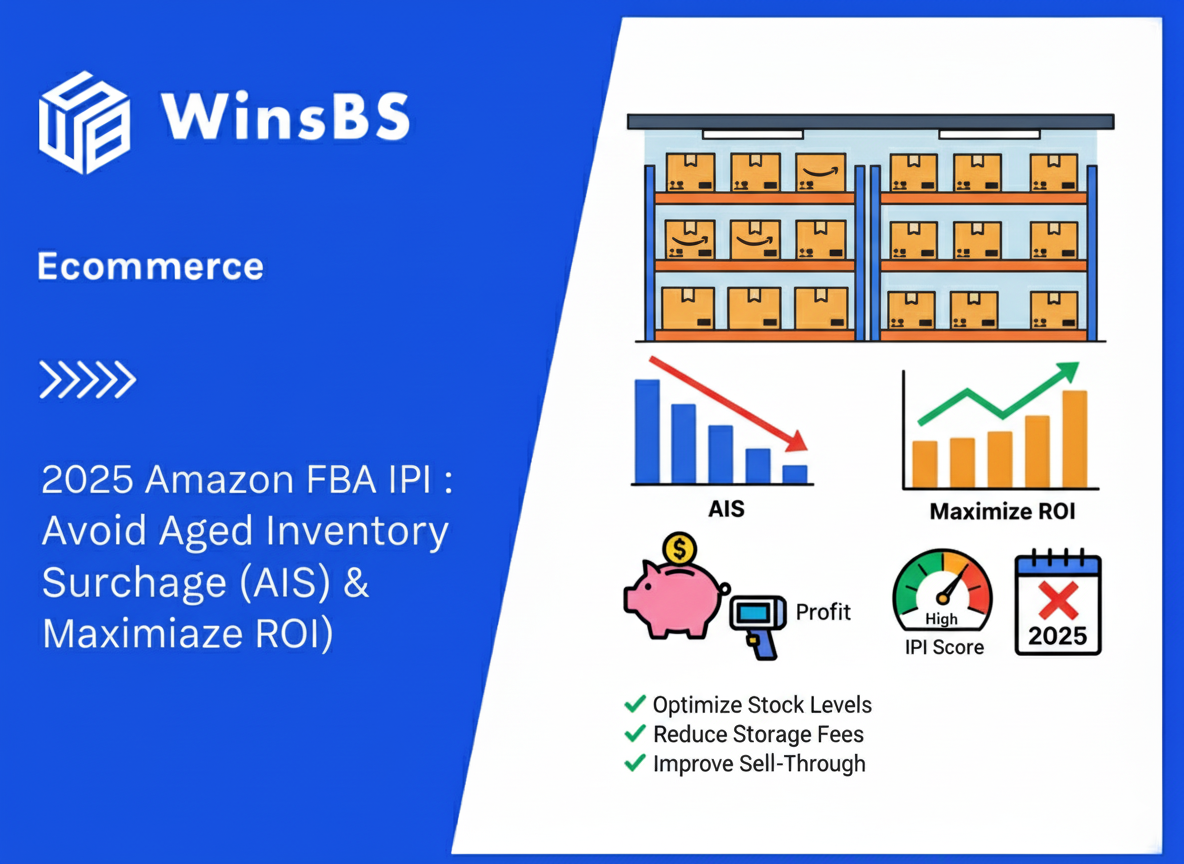
2025 Amazon FBA IPI Policy Deep Dive
Understand 2025 Amazon FBA IPI updates and how to avoid costly Aged Inventory Surcharge (AIS) penalties. Learn how to save on fulfillment costs and optimize your inventory management.
Read More →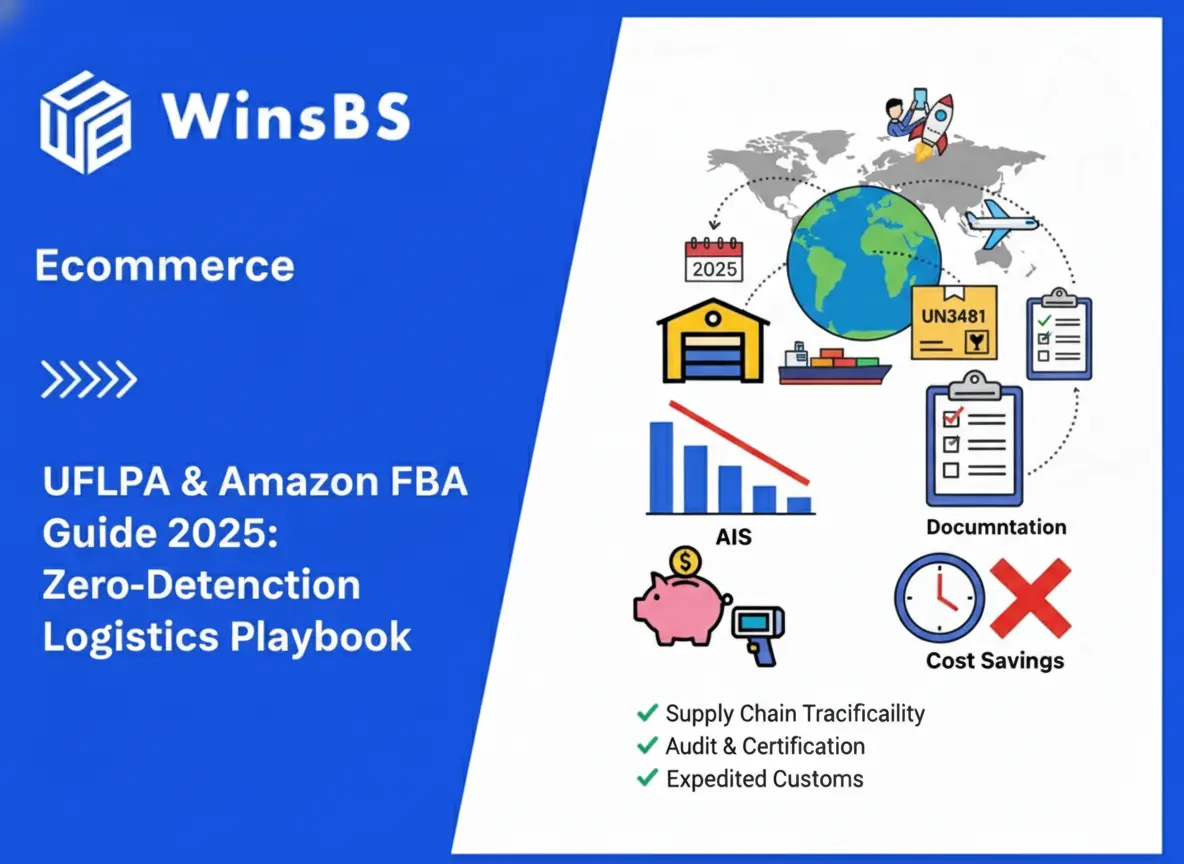
UFLPA & Amazon FBA: The 2025 Playbook for Zero-Detention Logistics
2025 UFLPA enforcement killed the Substantial Transformation loophole. Learn the 7-layer traceability system top Amazon FBA brands use to prevent detentions.”
Read More →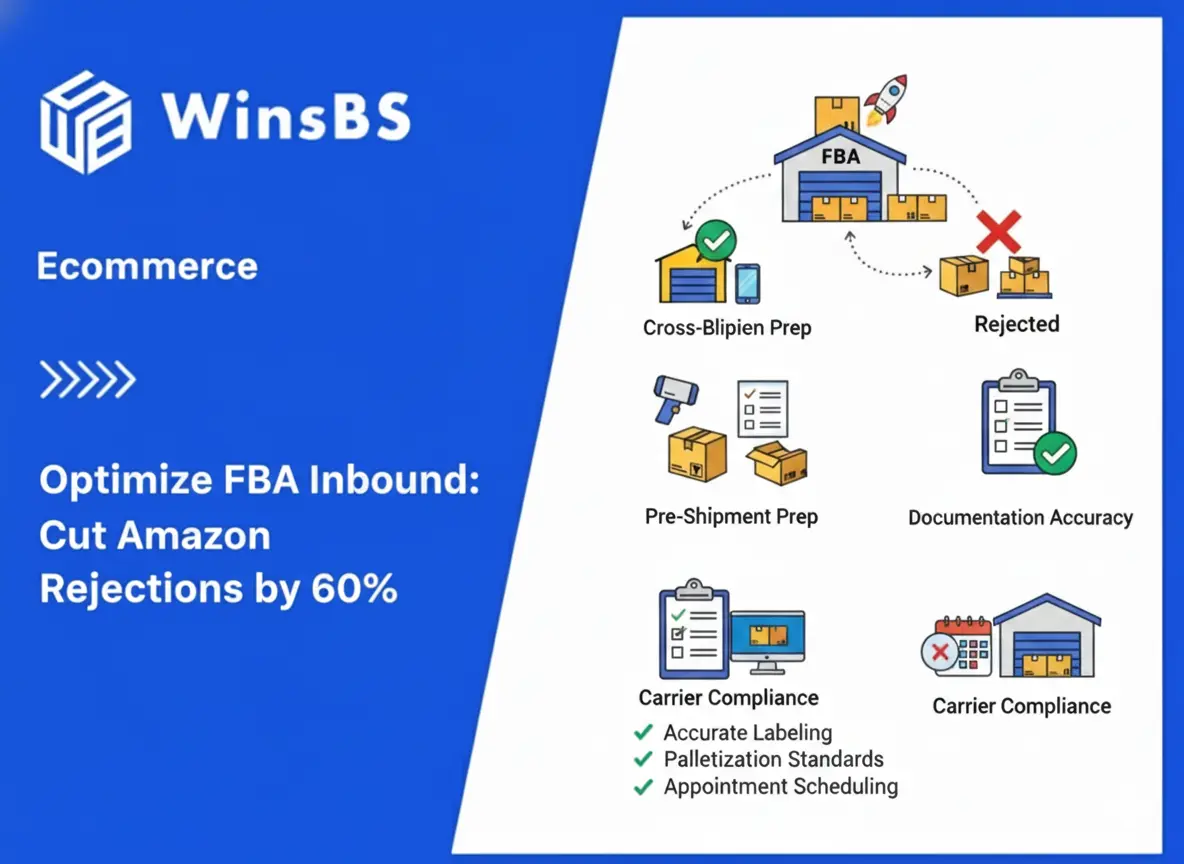
Optimize FBA Inbound & Cut Rejection Rate by 60%
2025 FBA inbound guide to reduce rejection rates by 60%. Learn carton rules, pallet standards, routing, ASNs, and 3PL workflows for U.S. sellers and crowdfunders.
Read More →FBA Is a Fulfillment Tool — Not a Risk Shield
FBA improves delivery execution, but it does not protect you from inventory aging, fee triggers, inbound errors, or compliance interruptions.
A stable FBA operation requires: inventory health monitoring, replenishment discipline, inbound SOPs, and a clear plan for removals and exceptions.
Content Attribution & License
General definitions and public references are shared under the CC BY-SA 4.0 License .
Analytical insights and fulfillment interpretations labeled “WinsBS Research” are © WinsBS Research (2025) and licensed exclusively to WinsBS Wiki.
* Information verified as of December 2025. WinsBS Research assumes no liability for policy changes after publication.