










Request for Proposal (RFP) — Fulfillment & 3PL Selection Definition (2025) Updated Dec 2025
Source: Council of Supply Chain Management Professionals (CSCMP), Gartner Fulfillment & 3PL Sourcing Frameworks, Oracle NetSuite Supply Chain Documentation, and WinsBS Research (2025). This entry explains RFP usage specifically in order fulfillment, third-party logistics (3PL) selection, and post-onboarding execution risk.
Industry Definition — Request for Proposal (RFP)
View Official Definition
A Request for Proposal (RFP) is a formal procurement document issued by a buyer to solicit detailed proposals from multiple vendors. In the context of order fulfillment and logistics, RFPs are used to evaluate third-party logistics providers, fulfillment partners, warehouse operators, and logistics service vendors before any contractual commitment or purchase order issuance.
Unlike price-focused documents, a fulfillment RFP evaluates operational capability, warehouse coverage, system compatibility, service-level commitments, scalability under peak demand, returns handling, and long-term execution risk.
— Council of Supply Chain Management Professionals (CSCMP), Fulfillment Sourcing Guidance (2025)
RFP in Order Fulfillment & 3PL Selection
In e-commerce, DTC, and omnichannel retail operations, RFPs are most commonly issued when brands select, replace, or expand relationships with order fulfillment providers and 3PL partners.
Fulfillment RFPs are typically required when:
- Switching from in-house fulfillment to a third-party logistics provider
- Replacing an underperforming 3PL or warehouse network
- Expanding from single-warehouse to multi-warehouse fulfillment
- Adding complex services such as returns processing, FBA prep, or international shipping
- Integrating OMS, WMS, or marketplace platforms at scale
Because fulfillment execution is dependent on physical operations, labor availability, and system reliability, RFPs in this domain must evaluate how a provider operates after go-live, not only how they price services on paper.
Core Components of a Fulfillment RFP (2025)
View RFP Structure
| RFP Section | Typical Contents | Fulfillment Impact |
|---|---|---|
| Business & Volume Scope | Order volume, SKU count, seasonality, channels | Determines labor planning and warehouse capacity fit. |
| Warehouse Network | Facility locations, square footage, certifications | Affects delivery speed, routing, and shipping cost. |
| Systems & Integrations | OMS, WMS, API, EDI support | Impacts onboarding timeline and data accuracy. |
| Operational Processes | Receiving, picking, packing, returns | Directly affects order accuracy and SLA compliance. |
| Service Levels | Order accuracy, cutoff times, turnaround SLAs | Defines measurable fulfillment performance. |
| Pricing & Cost Structure | Rate cards, surcharges, variable fees | Reveals total landed fulfillment cost. |
| Risk & Compliance | Insurance, escalation, compliance controls | Reduces operational and financial exposure. |
RFP vs RFQ vs Purchase Order (PO) in Fulfillment
View Comparison
| Document | Primary Role | Fulfillment Usage |
|---|---|---|
| RFP | Vendor and capability evaluation | Selecting 3PLs and fulfillment partners |
| RFQ | Pricing comparison | Comparing defined services or shipping rates |
| PO | Purchase authorization | Executing agreed services after selection |
Expert Analysis — Fulfillment RFP Failure Attribution
View Expert Insight
Fulfillment Sourcing Insight (Industry Synthesis, 2025):
In fulfillment and 3PL sourcing, RFPs fail not at the pricing stage, but at the execution translation stage. Industry reviews from CSCMP working groups and post-onboarding audits consistently show that weak RFP design leads to predictable operational breakdowns after go-live.
“Most 3PL failures are not caused by warehouse performance, but by misaligned assumptions embedded in the RFP. When volume profiles, service-level definitions, and system responsibilities are unclear, execution failure becomes statistically inevitable.” — CSCMP Fulfillment & 3PL Sourcing Roundtable Summary (2024–2025)
Across fulfillment operations, poorly structured RFPs tend to introduce risk at four specific points in the order lifecycle:
- Inbound mismatch: Receiving assumptions differ from actual SKU mix, carton configuration, or compliance requirements.
- System handoff failure: OMS and WMS responsibilities are insufficiently defined, causing order holds, inventory drift, or delayed releases.
- SLA ambiguity: Cutoff times, accuracy metrics, and exception handling are described qualitatively rather than operationally.
- Peak capacity collapse: RFP volume scenarios fail to model promotions, seasonality, or channel spikes, leading to labor shortfalls.
For this reason, fulfillment-focused RFPs are increasingly treated as execution risk filters, not procurement documents. Their primary function is to prevent downstream onboarding failure, SLA disputes, and forced provider replacement.
Critical Fulfillment Risks Caused by Weak RFP Design
View Risk Alerts
- Volume Assumption Mismatch
- SKU Profile Misalignment
- OMS–WMS Responsibility Gap
- Inbound Receiving Constraint
- Ambiguous SLA Definition
- Hidden Variable Fulfillment Fees
- Peak Season Capacity Underestimation
- Labor Scalability Failure
- Returns Workflow Omission
- Integration Timeline Overrun
- Onboarding Scope Creep
- SLA Enforcement Gap
RFP FAQ — Fulfillment Focus
When should a brand issue an RFP for fulfillment?
Brands issue fulfillment RFPs when selecting a new 3PL, expanding warehouse networks, or replacing a provider that cannot meet service-level requirements.
Is an RFP legally binding?
No. An RFP is an evaluation document. Legal obligations begin only after contract execution or purchase order issuance.
Why are RFPs critical for 3PL selection?
Because fulfillment success depends on execution capability, system integration, and operational scalability, which cannot be evaluated through pricing alone.
WinsBS Blog Insights
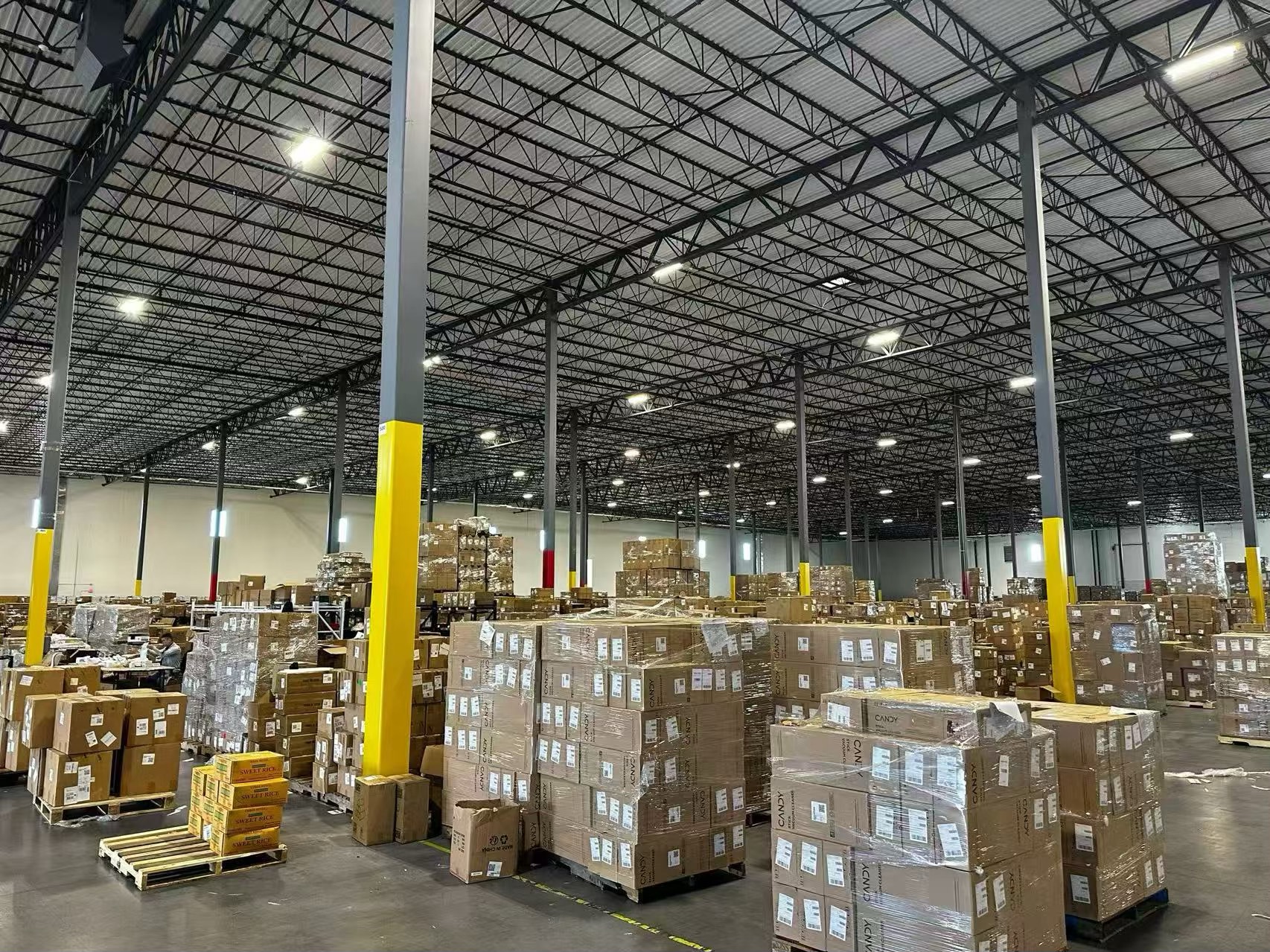
Why Most 3PL RFPs Fail Before the First Order Ships
An analysis of RFP design flaws that lead to onboarding delays, SLA breaches, and failed warehouse transitions.
Read Full Analysis →
RFP vs RFQ: Which One Actually Works for Fulfillment?
A practical comparison of RFPs and RFQs in real-world fulfillment operations.
Compare Approaches →
The Fulfillment RFP Checklist That Prevents 3PL Switch Failures
A detailed checklist covering scope definition, SLA design, integration requirements, and capacity planning.
View Checklist →Content Attribution & License
General definitions and public references are shared under the CC BY-SA 4.0 License .
Analytical insights labeled as “WinsBS Research” are original works © WinsBS Research (2025) and licensed exclusively to WinsBS Wiki.
Information verified as of November 2025. WinsBS Research assumes no liability for operational, vendor, or contractual changes after publication.